B r a i n C l e a r

Sorting through life one thought at a time

Author: brainclear

  • Vendor Speed Dating

    A couple of weeks ago, a woman reached out to me on LinkedIn about an invite-only event: leaders from the data and AI world, sitting down for roundtable discussions on data strategy, AI, and where the two are headed.

    “Blending peer perspectives with real-world approaches,” the invite promised.

    Sounded interesting. Totally up my alley.

    I noticed they specifically weren’t inviting salespeople.

    Now I know why. πŸ˜‚

    Walking into a room full of strangers and making small talk is not exactly my idea of a good time, so I was hesitant. But the subjects sounded too good to pass up, so I went.

    I got seated with two other people, one from Microsoft and one from HP, both at companies about the same size as where I work. We hit it off immediately, mostly by admitting we’d each almost bailed, and then by discovering we all wore Oura rings.

    None of us knew what was coming.

    There was a stack of papers on the table. It looked like we were supposed to rate something. I didn’t think much of it.

    Then it became clear.

    Speed dating. Basically.

    Except instead of asking what you like to do on weekends, they ask about your data architecture. And instead of deciding on a second date, you’re deciding whether your company needs their software.

    Eight vendors. Every 10 to 15 minutes, they rotated from table to table. Pitch their product, ask about our problems, explain how they could fix them.

    Yes, I realize this is also known as a sales pitch.

    Luckily, the woman from HP had an actual use case, so I mostly sat back and watched vendor after vendor take a swing at solving it.

    Ding. Next vendor. Ding. Next vendor. Ding. Next vendor.

    This went on for a couple of hours, after a full workday.

    Here’s the thing, though. I’d spent all this time before the event wondering if I’d be out of my depth. Would everyone else know more than me? Be more fluent in AI strategy and governance and all the impressive-sounding stuff?

    Instead, I noticed something I didn’t expect: we are all trying to figure something out.

    People from massive companies were stuck on the same kinds of problems, fishing for the same kinds of answers, sometimes just sitting there letting someone else do the talking, same as me.

    That was worth more than anything any vendor pitched.

    A bell rang for dinner. I’d made enough professional connections for one evening.

    I left.

    No dinner, no new software.

    Just slightly less impostor syndrome, a funny story to tell at work, and a few new LinkedIn connections.

    I’ll take it.
  • The Art of Connection

    In the past couple of days, the idea of connection has been on my mind.

    A close friend told me that after taking a DNA test, he discovered that his ancestry traced back to Nigeria, specifically to the Igbo people. Since then, he has embraced that part of his heritage and sometimes uses it as a way to connect with new colleagues at work. For him, it’s a way to let someone know they’re not alone, that there’s another person who might understand what it’s like to sometimes be the only one in the room who looks different, and that they, too, have every opportunity to grow and become everything they dream of.

    My first reaction was:

    Yes, but you’ve never been to Nigeria. Your parents, grandparents, and great-grandparents were all born in the United States. You can say your heritage is Nigerian, but are you Nigerian?

    I think that way because I’ve experienced the opposite.

    When I go to Swedish events, I often meet people who introduce themselves as Swedish because a great-grandparent emigrated to America. They’ve never been to Sweden. They don’t speak Swedish. In my mind, I’ve always thought of them as Americans with Swedish heritage rather than Swedes.

    But the more I thought about it, the more I realized maybe I was looking at it from the wrong angle.

    After all, it’s kind of sweet.

    We’re all looking for something that makes the world feel a little smaller. We look for common ground, an opening to start a conversation, the possibility of a new friendship, and the reassurance that we’re not alone.

    Yesterday I wandered through H&M, and for a moment it felt like the comfort of home. I go to Swedish events because I enjoy speaking my language and sharing traditions. And when I meet another European, especially another Scandinavian, there’s an immediate familiarity. We may come from different countries, but there’s an unspoken understanding that we grew up on the same side of the world.

    Might that be what connection is all about?

    It doesn’t have to be nationality.

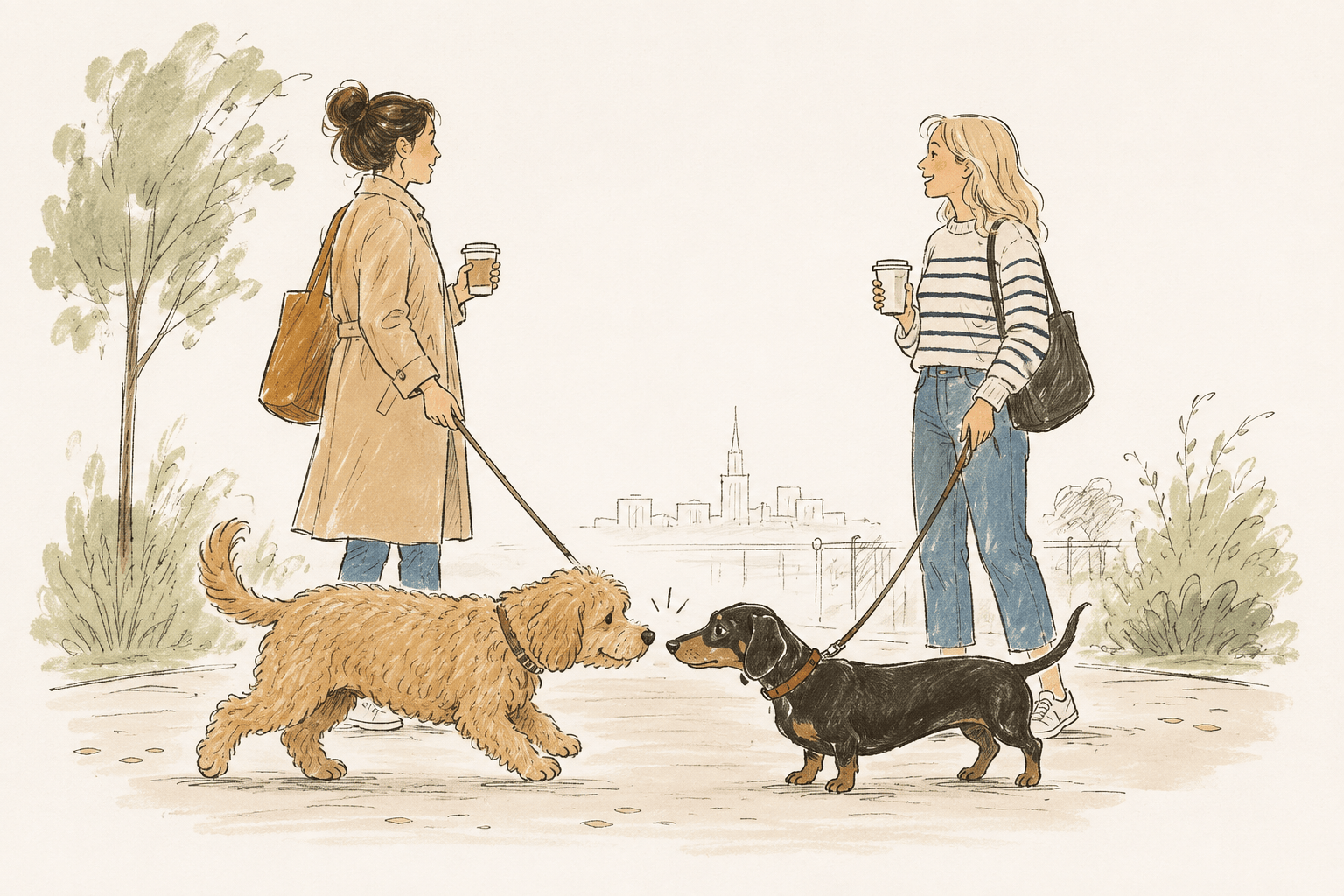
    Sometimes it’s as simple as being the only two women in a room or us both having dogs. I do this all the time. If I meet another dog owner, especially someone with the same breed as mine, we instantly have something to talk about. We compare food brands, swap funny stories, show each other pictures, and somehow complete strangers become people we’ve connected with, even if it’s only for a brief moment.

    I’ve even noticed that dogs seem to do something similar. They get excited to meet other dogs in general, but they also seem to recognize their own breed.

    I think we’re all just looking for that sense of belonging.

  • Life as an Analyst

    The truth is, we spend most of our days trying not to follow every interesting rabbit hole the data puts in front of us.

    Someone asks for “just a quick number,” and three joins, two CTEs, and one existential crisis later, we’ve found itβ€”along with four other numbers nobody asked for but that we now can’t stop thinking about. We tell ourselves we’ll ignore them. We do not ignore them.

    Case in point: I sat down last Saturday morning to look at one weird number. Four hours later it was afternoon, I still hadn’t finished, and nobody on earth had asked me to work on a Saturday. That’s not dedication. It’s curiosity… with questionable boundaries.

    I’ve always loved puzzles. Crossword puzzles, logic puzzles… it doesn’t really matter. I don’t even mind asking for a clue now and then. The fun isn’t knowing the answer. The fun is figuring it out.

    That’s probably why I became an analyst.

    The truth is, half our job is explaining that correlation isn’t causation, while the other half is secretly hoping it isβ€”just this once. It would make the story so much cleaner.

    People think analysts spend their days building reports and dashboards. We do. But what we really do is ask questions.

    Why is that number different? Why did it change? Should those two reports match? What happened here?

    Every dataset tells a story. Our job is figuring out what it’s trying to say.

    We build dashboards that we genuinely hope will help people make better decisions. Sometimes they do. Sometimes they’re opened once, admired for thirty seconds, and never seen again.

    The truth is, nobody actually wants the raw data. They want the one number that confirms what they already believed walking into the meeting.

    We know this. We give them the number. Then, gently, we show them the other numbers.

    This is called being thorough. It’s also called hope.

    Every “quick question” is a Trojan horse for a two-day project, and we say yes anywayβ€”not because we have to, but because we’re curious like that. Somewhere between the fifth JOIN and the sixth GROUP BY, this stopped being a job requirement and became a personality trait.

    We don’t fix the data because someone asked us to. We fix it because leaving it wrong feels like leaving a picture frame crooked on someone else’s wall. It nags at us until we fix it. Or maybe that’s just me.

    I didn’t finish that Saturday problem in one sitting, by the way. I came back to it Sunday. I’m still a little annoyed about it.

    Maybe that’s the real job description nobody puts in the posting.

    Not “Proficient in SQL, Power BI, Tableau, SSIS…”

    Although yes, preferably someone who can also remain reasonably calm at 11 p.m. when a package fails for reasons the error log refuses to explain.

    No.

    The real qualification is curiosity.

    Someone who can’t walk past a number that doesn’t quite fit without wondering why.

    The most honest conversation in any company happens in a footnote that says, “Excludes outliers.”

    Almost nobody reads it.

    We read it. We wrote it. We know exactly which outliers were excluded, why they were excluded, and we probably have strong opinions about whether they should have been excluded at all.

    That’s the quiet, slightly obsessive, deeply curious life of an analyst.

    Chasing the number nobody asked for. Straightening the picture frame nobody noticed was crooked. Following one more rabbit hole than we probably should.

    Because every unexpected number tells a story. And every story begins with someone curious enough to ask one more question.

    Our minds aren’t wired to stop at the answer. They’re wired to wonder what else we might be missing.

  • Peanut Butter Toast

    Some favorites never change.

    When I woke up this morning, I knew I wanted to write something.

    Here’s the thing: I have a long list of subjects and ideas for future posts, but they all seem perfectly happy staying on that list. They rarely volunteer to become an actual blog post.

    So, I wandered into the kitchen to make myself something to go with my coffee.

    Peanut butter toast.

    I’m trying to remember when I got hooked on it. It definitely wasn’t growing up because peanut butter wasn’t really a thing in Sweden when I was a child. Somewhere along the way it found me, and apparently decided it wasn’t leaving.

    If you ask me what my favorite food is, there’s a good chance I’ll say peanut butter toast with sliced bananas.

    Which is funny, because I’m actually a foodie.

    Food has always been a big part of life in my family. We made a celebration out of good meals, and whoever had cooked was praised as if they’d just won a Michelin star. I still love trying new restaurants, new cuisines, and dishes I’ve never had before, and one of my favorite parts of traveling is discovering local food.

    There’s something special about that first bite of a meal you know you’re going to love. I swear it sends little feel good signals all over your body.

    A while back I won a prize at work, and they interviewed me for the company newsletter. One of the questions was,Β “What’s your favorite food?”

    Without thinking, I answered, “Peanut butter toast.”

    I’m pretty sure they expected something a little more exciting.

    The picture I sent to work when they asked for my favorite food: peanut butter toast and bananas, on my favorite koala plate.

    It’s hard to pick just one favorite β€” avocado’s a close second (if I see it on a menu, I’m probably ordering it before I finish reading the description), and peanut butter with chocolate is its own category of unbeatable. But none of that changes the answer I keep coming back to.

    As I stood there this morning with my coffee and peanut butter toast, I started thinking about comfort food.

    It’s funny how some foods stay with us through the years. Not because they’re fancy or impressive, but because they never disappoint. They taste exactly the way you expect them to. They make an ordinary morning feel just a little bit better.

    For me, that’s peanut butter toast with sliced bananas.

    Simple.

    Reliable.

    And somehow… still perfect.

  • The Milk, the Bees, and Time

    My mom had me when she was very young, so I spent a lot of my childhood with my grandparents. They lived in the countryside about 90 minutes from Stockholm, where they grew their own vegetables, and my grandfather was a beekeeper. He loved his bees and believed just about everything could be cured with a bee sting and honey.

    Looking back, everything seemed so green and beautiful.

    Just down the road was a farmer where I would go to help out, mostly because I wanted to be around the animals. That’s also where we bought our milk. If it was cold outside, Grandma would leave the milk on the porch. Otherwise, it went into the refrigerator, where the cream would slowly rise to the top.

    Every morning she would take a spoon, carefully skim off the thick layer of cream, and pour it into a glass. Then she’d look at me with a smile and say, “Now this is real skim milk.”

    The joke, of course, was that I insisted I wanted the skim milk from the grocery store.

    There were only two buses a day from their little village into the nearby town of Avesta. Sometimes we’d take the bus to swim at the indoor public pool or simply wander through the shops. When you’re a child, everything feels enormous. The town felt like a city, and even an ordinary bus ride felt like an adventure.

    My grandfather came to Sweden from Poland after the Second World War. He met my grandmother, fell in love, and stayed. Even on the day he died, he still spoke Swedish with his own unmistakable accent. He was a wonderful grandfather to me, although I later learned there were other sides to him. My mother, aunts, and uncle have shared stories of how hard he could be on the family. It’s funny how we can know the same person so differently.

    Memory has a way of opening one door after another. One thought leads to the next until you’re wandering through places you haven’t visited in years.

    One thing I remember my grandmother saying was, “The older you get, the faster the years go.”

    At the time, I thought, Right…

    Years felt endless. School semesters seemed to last forever, and summer vacations felt like entire lifetimes.

    The funny thing is, I don’t ever remember my grandmother being young. Looking back, I realize she was only 42 when I was born. Forty-two. Younger than many grandparents are today. But in my mind, she has always been wearing her house dress, with her short curly hair, standing in the kitchen, always baking or cooking something.

    She was one of those people who always seemed to be in good spirits. Looking back, I know she had lived through difficult times, yet she never lost her sense of humor. Even in the final years of her life, she was quick with a joke and somehow managed to make the people around her laugh.

    Now, years later, I finally understand what she meant.

    The future has a way of arriving quietly. Things you once thought were impossibly far away are suddenly here, and something that happened a year ago can feel like yesterday.

    Maybe time doesn’t actually speed up.

    Maybe we just get better at noticing how precious it is.

    That’s also why I choose to write the way I do.

    Life has never been free of heartache or worry. Like everyone else, I’ve had moments that changed me, and there are stories I may tell one day. But there is already plenty in this world competing for our attention: headlines, arguments, and reasons to feel overwhelmed.

    This little corner of the internet isn’t meant to ignore those things. It’s meant to make room for something else.

    I want to remember the taste of fresh milk from my grandparents’ farm, my grandmother’s laugh, the adventures that felt enormous when I was little, the dogs sleeping at my feet, and all the ordinary moments that quietly become the memories we treasure.

    Because when I look back on my own life, it’s the ordinary moments that have stayed with me the longest.

    And I’ve noticed something else. Many of the stories that are hilarious today were anything but funny when they happened. At the time I worried, cried, overthought, or wondered how I’d ever get through them. Twenty years later, they’re the stories that make everyone around the dinner table laugh.

    I wouldn’t choose to relive them, but I have learned that time has a remarkable sense of humor.

    That’s why I write about the lighter side of life. Not because difficult things don’t happen, but because eventually, if we’re lucky, some of them become stories instead of burdens.

  • The Rabbit Hole of Overthinking

    “I was thinking maybe, someday, I’d like an electric car. Five minutes later I was calculating battery production, worrying about climate change, imagining my dogs overheating, and wondering what kind of planet my nieces and nephews will inherit. Meanwhile, my perfectly good car was sitting in the garage wondering what it had done wrong.”

    Anyone else’s brain take the scenic route?

  • Sunday Funday

    Every Sunday I become the CEO of Good Intentions.

    My agenda includes meal prep, organizing, exercising, watering the plants, answering texts, reading a book, and somehow relaxing.

    I got up at 6 a.m. with a solid plan:

    Walk the dogs and get some work done before my 9 a.m. Pilates class.

    It’s now 11:30.

    I’ve taken the dogs on a long walk, gone to Pilates, gotten sucked into my current audiobook, spent way too much time comparing Apple Watches because mine is a Series 7, and somehow it’s almost lunchtime.

    The work I got up at 6 a.m. to do? It’s still patiently waiting for me.

    Funny how some days you can be busy for hours without touching the one thing you originally planned. Then again, the dogs had a great walk, I moved my body, and I got lost in a good book.

    Maybe Sundays aren’t meant to be efficient. Maybe they’re just meant to be lived.

    And after all… it’s only lunchtime. There’s still plenty of time to get a few things done.

    At least that’s what the CEO of Good Intentions keeps telling herself while sipping tea and making absolutely no move toward her laptop.

    Just wondering… am I the only one who creates a to-do list worthy of three people every Sunday?

  • When Efficiency Met the South

    I didn’t just move from Sweden to the United States. I moved from Stockholm to St. Marys, Georgia. Looking back, I’m not sure I could have picked two places that were more different.

    I thought the biggest adjustment would be speaking English every day. It wasn’t. It was discovering that I had landed in a place with a completely different rhythm.

    In Stockholm, the checkout line is all about efficiency. You pack your own groceries, and you’d better be done by the time the cashier has scanned the last item, or the customer behind you might start getting impatient. There isn’t much small talk because everyone has somewhere to be, and the goal is to get through the line as quickly as possible.

    St. Marys was a completely different experience. The cashier knew the customer in front of me, and they chatted about family, church, the weather, someone’s tomato plants, pretty much anything and everything. Meanwhile, another employee packed the groceries while I stood there wondering if we’d ever get to the part where I actually paid. I remember thinking,Β “Are we still checking out?”

    At the time, it drove me crazy. I wasn’t used to it, and if I’m being honest, I just wanted to grab my groceries and go. But somewhere between Stockholm and St. Marys, my perspective changed.

    Today, I smile when I think about those checkout lines. I’ve realized they were never just about buying groceries. They were about taking a few minutes to acknowledge another person, catch up with a neighbor, or simply make someone’s day a little brighter.

    Somewhere between Stockholm and St. Marys, I learned that not everything has to be efficient. Sometimes, slowing down long enough to connect with another person is the whole point.

    Although I still silently hoped nobody brought up tomato plants when I was buying ice cream.

  • Patriotism as an Expat

    Thinking about patriotism today on Americas birthday.

    Living here has made me think about it in a way I never really did growing up in Sweden.

    If Sweden whispers, “We’re proud to be Swedish,” America says it with a microphone. Sometimes I joke that Americans want to make sure you never forget what country you’re in and all those flags certainly help.

    The funny thing is, I don’t think Swedes are any less proud of their country.

    We just seem to show it differently.

    I’ve often wondered if part of the reason is that loud national pride can feel uncomfortable. There seems to be a quiet awareness that celebrating “us” too loudly can start to sound like excluding “them.”

    You see it when Sweden plays in the World Cup or the Olympics. Suddenly the blue and yellow flags appear, everyone is glued to the TV, and strangers celebrate together.

    One thing I’ve noticed over the years is that many Swedes seem to become even more patriotic after moving abroad.

    When you grow up in Sweden, Midsummer, Lucia, crayfish parties, cinnamon buns, and those long summer nights when the sun barely sets and you’re complaining because you need blackout curtains just to sleep, are simply everyday life.

    You don’t think much about them because they’ve always been there.

    Then you move away.

    Suddenly you’re explaining Lucia to your American friends. You’re driving across town to find Swedish candy. You get excited when you hear someone speaking Swedish in the grocery store. You celebrate Swedish traditions with a handful of other Swedes, trying to recreate a little piece of home.

    Even IKEA becomes more than a furniture store, and H&M becomes more than a clothing store. They become little pieces of home.

    It’s interesting how distance can make you appreciate things you once took for granted.

    Maybe that’s one of the unexpected gifts of living abroad you don’t just discover a new country, you rediscover your own. πŸ‡ΈπŸ‡ͺ

  • How to get out of your funk

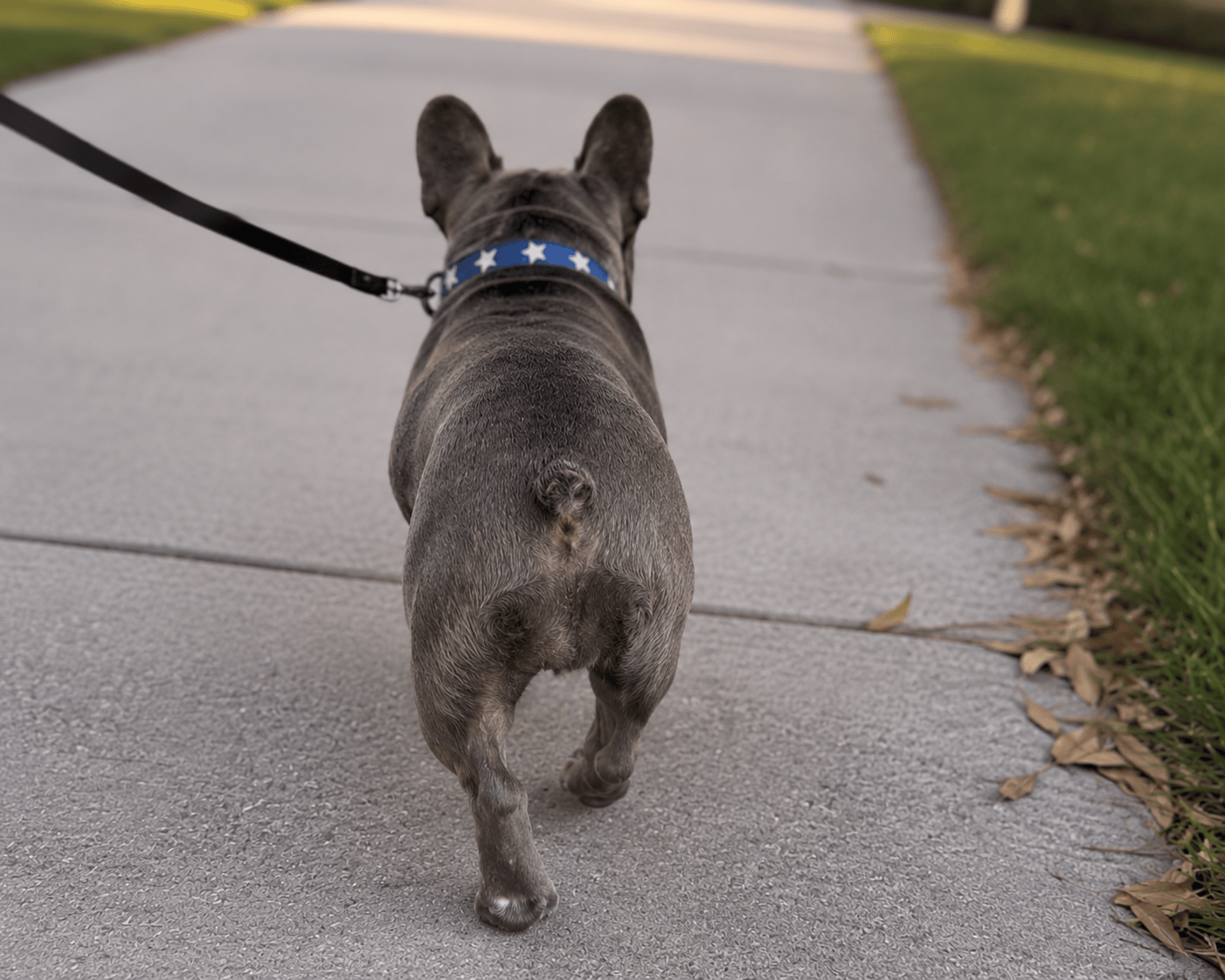
    Watch a Frenchie walk.

    It always hits me on our walks just how ridiculously cute his little Frenchie butt is.

    No matter what’s going on in my head, watching that tiny wiggly butt marching down the sidewalk somehow makes everything feel a little lighter.

    Therapy is great.

    But Seriously,

    That tiny wiggly butt has the power to fix at least 37% of life’s problems.

    Don’t have a Frenchie?

    A French baguette won’t wiggle…

    …but it might still improve your day. πŸ˜„πŸ₯–